Teaching students about algorithmic bias through real-world examples
Teach students to spot algorithmic bias in education with real examples, hands-on activities, and practical lessons for grades 5-12.
Cheska Robinson • Jan 5, 2026
AI Literacy Safety & Policy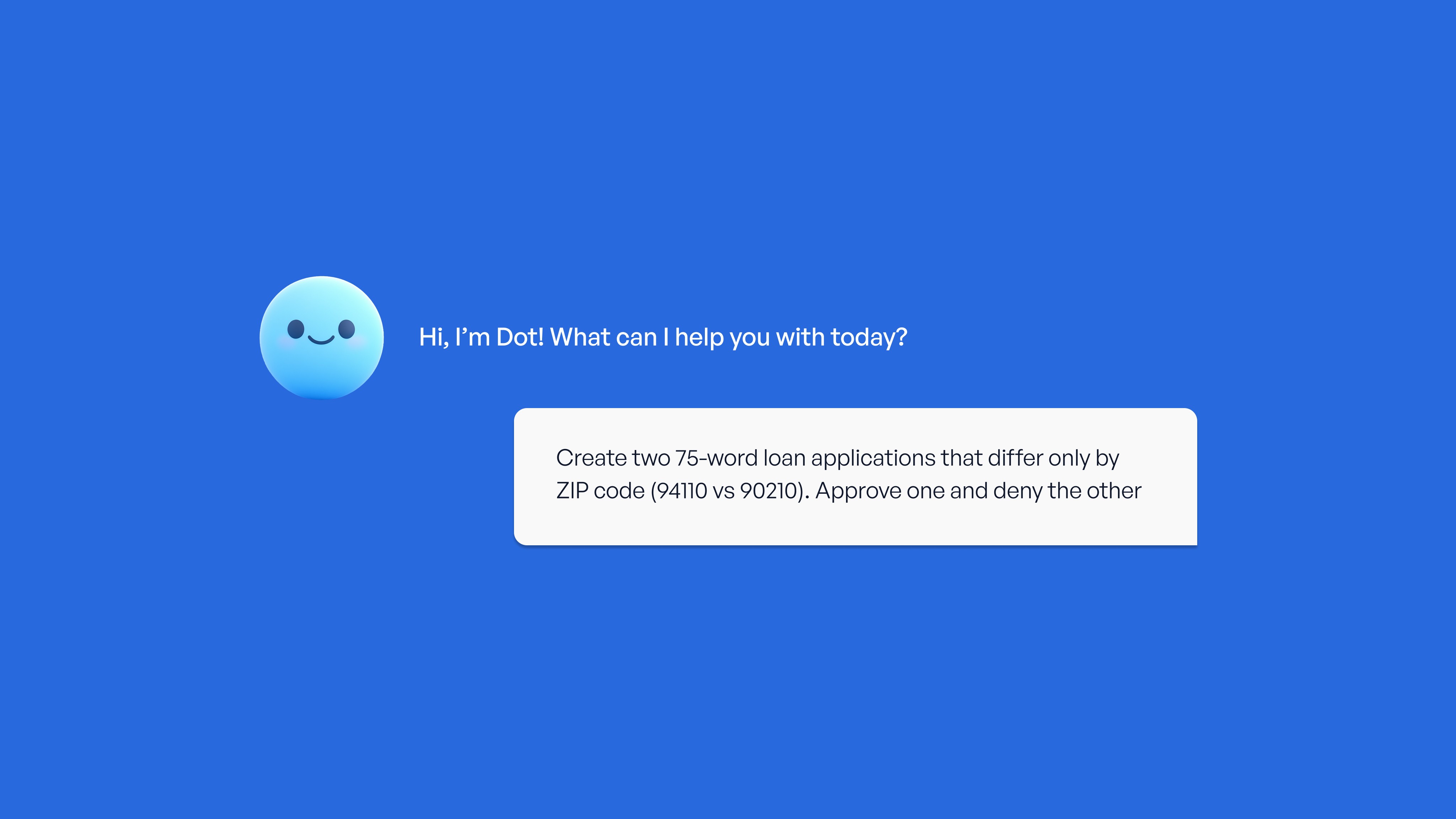
Key takeaways
-
Algorithmic bias happens when AI learns unfair patterns from lopsided data or historical data, creating systems that treat some students differently from others
-
Real examples like biased hiring algorithms or unfair grading systems help students see how automated decisions affect their daily lives and future opportunities
-
Teaching bias recognition helps students question automated decisions instead of blindly trusting them, a core digital citizenship skill
-
Simple classroom activities like algorithm audits or mock loan applications fit into a single class period and work across math, ELA, or social studies lessons
When AI is trained on incomplete or stereotyped data, it repeats those unfair decisions at scale. Researchers call this algorithmic bias: a pattern that favors some groups over others, often without anyone noticing until real harm occurs.
Your students encounter these hidden decisions daily. AI sorts their social media feeds, grades their essays, and helps determine who sees scholarship offers or academic interventions. When students don't know how to recognize bias, these systems can quietly widen gaps in education, healthcare, and wealth.
These examples and activities can be adapted for grades 5-12 and require no technical or coding background. Teachers can integrate them into existing lessons in social studies, math, ELA, computer science, or advisory without adding new units.
What algorithmic bias looks like in everyday student life
Algorithms are rulebooks that look for patterns in historical data to predict what will happen next. If certain neighborhoods, languages, or communities are underrepresented in that data, the algorithm learns the same blind spots.
Students interact with decision-making algorithms daily. Music apps suggest playlists, browsers tailor ads, and school platforms predict who needs help. In real-world systems:
-
High-paying job ads show up more often for boys
-
Automated graders undervalue African American Vernacular English (AAVE)
-
Facial-recognition tools mislabel darker-skinned faces
During the pandemic, a UK grading algorithm lowered marks for students from state schools while boosting scores at wealthier private schools.
Frame this through digital citizenship: When students spot unfair patterns, teach them to ask: Who built this tool? What data trained it? Who benefits from the outcome?
7 algorithmic bias examples students encounter daily
These case studies show how biased data leads to biased outcomes.
1. Healthcare bias (unequal access to care)
A hospital algorithm ranked patients by projected cost rather than illness severity. Since Black patients historically received less expensive care, the system incorrectly assumed they were healthier. Research found that nearly 18% of Black patients who needed extra care were overlooked.
Use in: Health class, Biology, Ethics, or Math
2. Hiring bias: disadvantaging women
Amazon tested a resume screener that downgraded applications containing words like "women's" (as in "women's chess club captain"). The model was trained on ten years of mostly male hiring data, learning to prefer male-coded language.
Use in: Career readiness, Economics, ELA, or Social studies
3. Criminal justice and predictive policing
Predictive policing software directs patrols to neighborhoods with the highest predicted crime risk. It learns from arrest data, not actual crime rates. Over-policed neighborhoods generate more arrests, creating a feedback loop that reinforces bias.
Use in: Social studies, Civics, Debate, or Statistics
4. Lending and financial discrimination
Mortgage-pricing algorithms have charged Black and Latinx borrowers higher interest rates than white borrowers with identical credit profiles. Even a fraction of a percentage difference can cost families tens of thousands of dollars over a 30-year loan.
Use in: Math, Personal finance, Economics, or Social studies
5. Facial recognition inaccuracy
Commercial facial recognition systems misidentify darker-skinned women far more often than light-skinned men. Show students Joy Buolamwini's research video, where her laptop fails to recognize her face until she puts on a white mask.
Use in: Computer science, Art, Social studies, or STEM
6. Child welfare and risk assessments
Florida's child welfare algorithm flagged minority mothers at disproportionately high rates for potential neglect. The system relied on proxy data such as neighborhood poverty instead of direct evidence of harm, leading to invasive investigations.
Use in: Sociology, Psychology, Ethics, or Civics
7. Age discrimination in hiring
Recruiting platforms were caught filtering out applicants whose graduation dates suggested they were over 40. The model inferred age from resume timelines and quietly sidelined experienced candidates.
Use in: Career readiness, Statistics, Computer science, or Business
How bias shows up in the classroom technology Educational algorithms affect students directly, from dropout prediction tools to essay-grading systems.
- Student risk prediction tools wrongly labeled 19% of Black students and 21% of Latinx students as likely dropouts, even though those students later earned college degrees. Research confirms these predictive models unfairly restrict access to educational opportunities, reinforcing societal inequities through algorithmic bias.
Ask your class: "How hard would you work if a computer had already decided you'd fail?"
-
Automated essay-grading systems penalize students whose writing doesn't match the training data. Students who use AAVE or write as multilingual learners consistently receive lower scores.
-
Pandemic grading algorithms in England revealed stark inequities when predicted grades replaced exams. Grades rose at wealthy private schools and fell at public schools.
-
School funding formulas often use algorithms that consider zip codes, test scores, and attendance. Since zip codes correlate with race and income, students in under-resourced neighborhoods often receive less support.
-
AI writing assistants still connect "nurse" with women and "engineer" with men far more than labor statistics support.
How to teach algorithmic bias through classroom activities
Short on time? Each activity below fits into 10-30 minutes and requires only paper or slides:
Case study gallery walk
Print 4-5 one-page bias summaries. At each station, students answer:
-
What decision did the algorithm make?
-
Who was helped and harmed?
-
How could different data change the result?
"What if the data changed?" activity
Give students a fictional scholarship data set (GPA, zip code, activities). In pairs, students modify one variable and predict how outcomes change. Then reveal the algorithm's new output.
Students become the algorithm
You act as the training data. Students raise "Approve" or "Reject" cards as you read applicant profiles aloud, based on patterns they think you want. Afterward, reveal the hidden rule that favored short commutes.
Spot-the-bias reading analysis
Generate two short news blurbs about tech careers. Students underline language that links jobs or traits to gender or race. Older students rewrite passages to be neutral; younger students highlight biased words.
Using SchoolAI to teach algorithmic bias
SchoolAI provides a classroom-safe AI platform designed for teacher-led demonstrations and student practice.
1. Generate contrasting examples quickly
In SchoolAI Spaces, ask Dot: "Create two 75-word loan applications that differ only by ZIP code (94110 vs 90210). Approve one and deny the other."
2. Create biased vs. fair simulations
Feed students a skewed dataset, then rebalance it. Students immediately see how outcomes shift when data changes.
3. Reflect and discuss
Students write a 150-word reflection on how algorithms learn bias. Visible chat history lets you correct misconceptions in real time.
Equip students to question AI systems
Understanding algorithmic bias turns digital citizenship into a daily practice. When students learn how inequality enters data-driven systems, they gain the confidence to question automated decisions instead of accepting them as neutral.
These examples and activities help students move from awareness to action. Whether through gallery walks or AI simulations, students learn that technology reflects human choices—and they can choose to build something fairer. Explore SchoolAI to demonstrate bias in real-time.
Frequently Asked Questions
Start with something students already understand, like why their TikTok or YouTube feeds look different from their friends’. Explain algorithmic bias as “a system that learns from past decisions and repeats them even when they’re unfair.” Show a simple comparison between fair and biased outcomes using everyday analogies, such as “a robot that only reads one side of the story.”
Introduce one concrete example, like biased résumé screening, then ask students how they would fix it. This shifts students from feeling helpless to feeling empowered.
Keep the focus on decisions, not code. Walk students through what data a tool collects, what decision it makes, and who benefits or is harmed. A quick demo—such as image cropping that misses darker faces—sparks discussion without equations.
Try simple activities like sorting cards by basic rules to show how small biases compound over time. End with the question: “What would you change if you built this?” and use a short exit ticket to check understanding.
Middle school students connect best with tools they use daily, such as facial-recognition logins or content recommendations. High school students can handle higher-stakes examples like Amazon’s résumé screener or the UK’s 2020 grading algorithm.
Keep the tone curious, not alarming, and always pair examples with the question: “How could this be made fairer?” to keep the focus on solutions.
Teachers can create biased demonstrations in minutes using SchoolAI Spaces. For example, ask Dot to generate two loan approval letters: one using income plus ZIP code and another ignoring location. Students immediately see how a single variable changes outcomes. Mission Control lets you monitor every student conversation in real time, helping you guide discussion and address misconceptions as they arise. Use a PowerUp like Mind Map to help students brainstorm solutions together.
Teaching algorithmic bias turns digital citizenship into daily practice. When students question why a platform suggests certain videos or flags their writing, they develop critical thinking for both technology and media literacy.
Students also see that algorithmic mistakes often mirror real-world inequalities, helping them connect ethical reasoning with technical systems. This combination prepares students to participate responsibly in an AI-driven world.

About the author
Cheska Robinson
Education Specialist at SchoolAI, Former Instructional Technology Specialist
Cheska started her career as a science teacher, where hands-on learning and student curiosity shaped how she thinks about great classrooms. At SchoolAI, she partners with educators exploring practical, people-first ways to bring AI into their teaching, building professional learning that feels approachable, rooted in real classroom needs, and focused on keeping learning personal.
Transform your teaching with AI-powered tools for personalized learning
See how every student is doing, and know what to do next.