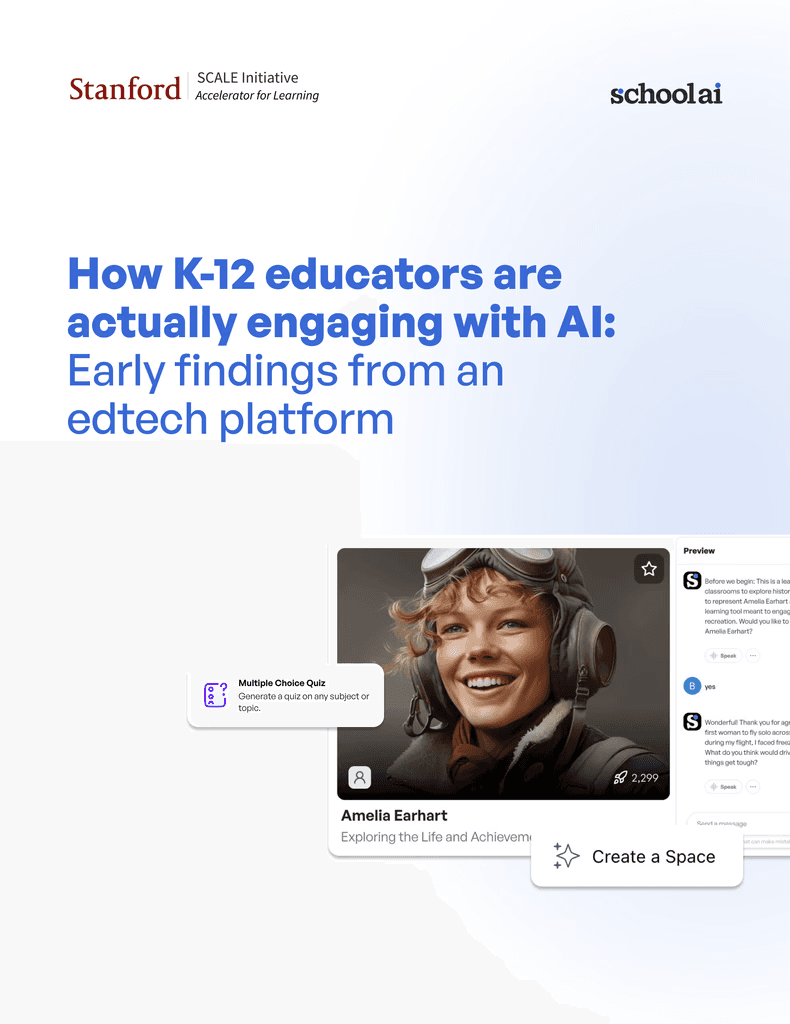
Stanford study tracks real teacher behavior across 9,000 educators
Stanford University's AI Hub for Education released the first behavioral study of its kind, tracking how over 9,000 K-12 teachers engaged with AI tools during a 90-day period. This research analyzed pure behavioral data—every login, feature use, and interaction—to understand real classroom adoption patterns.
The findings reveal significant sustained engagement over the 90-day period. More than half of teachers used the platform for five or more days, and 42% became Regular or Power Users with eight or more active days. This retention rate significantly outperforms typical SaaS benchmarks, where only 30% of users remain active after three months.
Teachers integrated AI into their busiest hours. The vast majority of activity happened during weekday mornings, indicating that AI tools are being used during active teaching time and lesson preparation rather than after-hours planning. This pattern shows AI is becoming part of daily classroom workflow, not just an occasional experiment.
Feature usage showed clear priorities. Teacher productivity tools (37% of usage time) and AI assistants for grading and brainstorming (27%) led adoption, followed by student-facing chatbots (23%). As teachers became more experienced with the platform, they shifted even more time toward teacher-support features, with power users spending over half their platform time using AI assistants.
The study also revealed adoption progression. While about a third of teachers stopped after their first few days, those who continued showed consistent engagement patterns. By their 15th day on the platform, Regular Users allocated nearly 70% of their platform time to teacher-support tools—mirroring the habits of the most engaged users.
These findings address a critical question for education leaders: Can AI tools demonstrate sustained value in real classroom environments? The behavioral data suggests yes.
When tools fit into existing routines and deliver immediate value during the busiest parts of the teaching day.
Read the full Stanford SCALE research to explore detailed usage patterns, retention metrics, and implications for AI adoption in K-12 education.
A study of 1,070 students across 36 schools finds that regular users report stronger engagement, deeper thinking, and more confidence in their future
Read article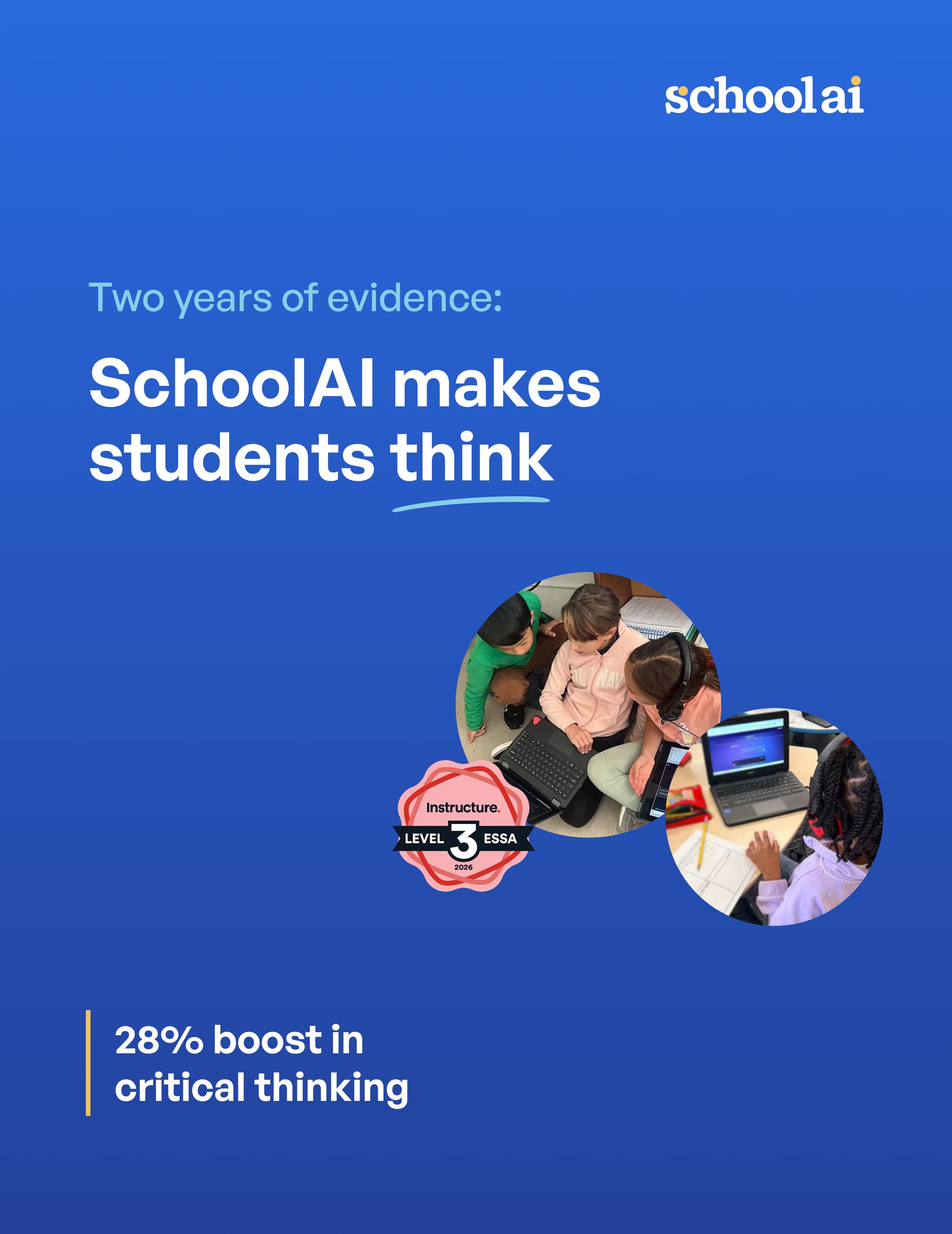
A two-year study of 13,882 student-AI conversations shows a 28% boost in critical thinking and earns ESSA Level III certification.
Read article