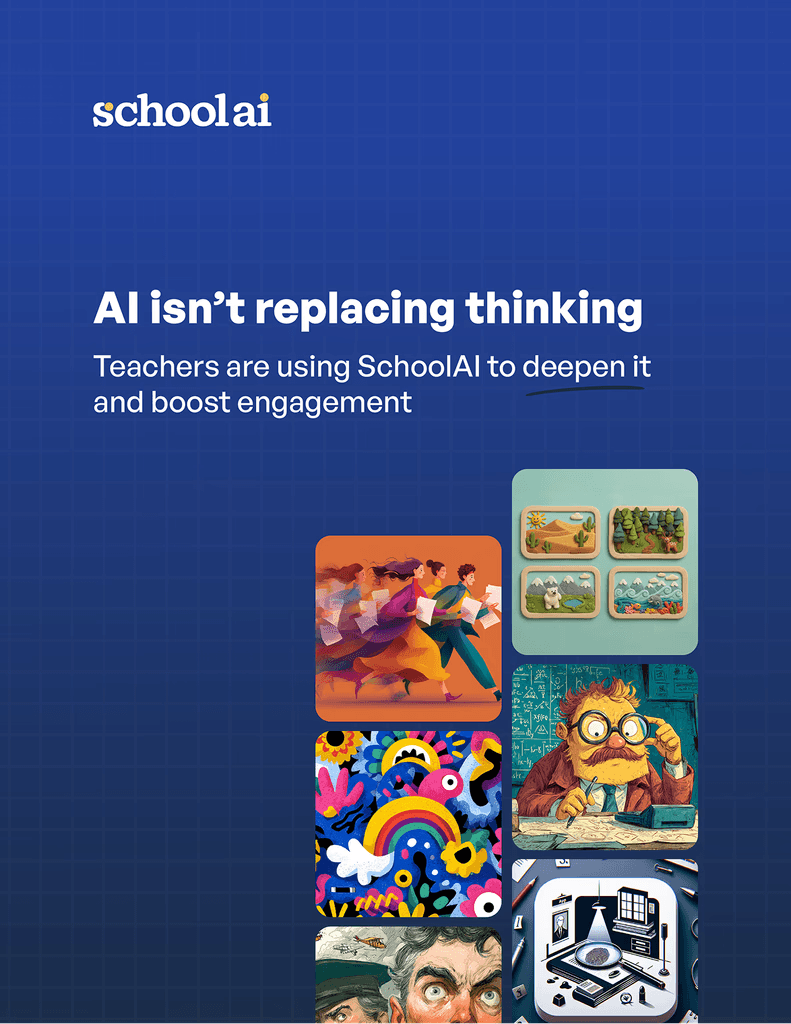
Teachers are using AI to deepen student thought, not to replace it
Does AI undermine critical thinking or deepen it? New research from SchoolAI analyzed over 23,000 teacher-designed learning experiences to understand whether students are actually engaging in critical thinking when learning with AI.
The findings are encouraging. Students aren't just getting quick answers. They're being asked to analyze, evaluate, and create. About 60% of the learning activities analyzed required students to reason and make decisions rather than simply recalling information. Across subjects and grade levels, AI-supported learning experiences are designed to deepen cognitive work, not replace it.
The study also reveals how AI enables new forms of engagement that would be difficult to scale without it.
Students are experiencing interactive simulations, personalized pathways, and opportunities to ask their own questions and explore at their own pace.
At the same time, teachers are setting explicit rules to ensure AI functions as a thought partner, not a shortcut.
Science emerged as the most interactive subject, with students exploring simulations and hands-on scenarios. Reading showed strong emphasis on perspective-taking and interpretation through role-play activities. Interactivity and playfulness were more common in elementary grades, and rule-setting appeared most often in reading and upper grades, where concerns about over-reliance on AI may be strongest.
When guided by thoughtful instructional design, AI can amplify critical thinking rather than erode it. The challenge isn't whether to use AI in education, but how to design learning experiences that invite deeper reasoning, expand student choice, and bring lessons to levels of personalization and exploration that weren't possible before.
Download the full report to explore how teachers are using AI to strengthen student thinking across ELA, math, science, and social studies.
A study of 1,070 students across 36 schools finds that regular users report stronger engagement, deeper thinking, and more confidence in their future
Read article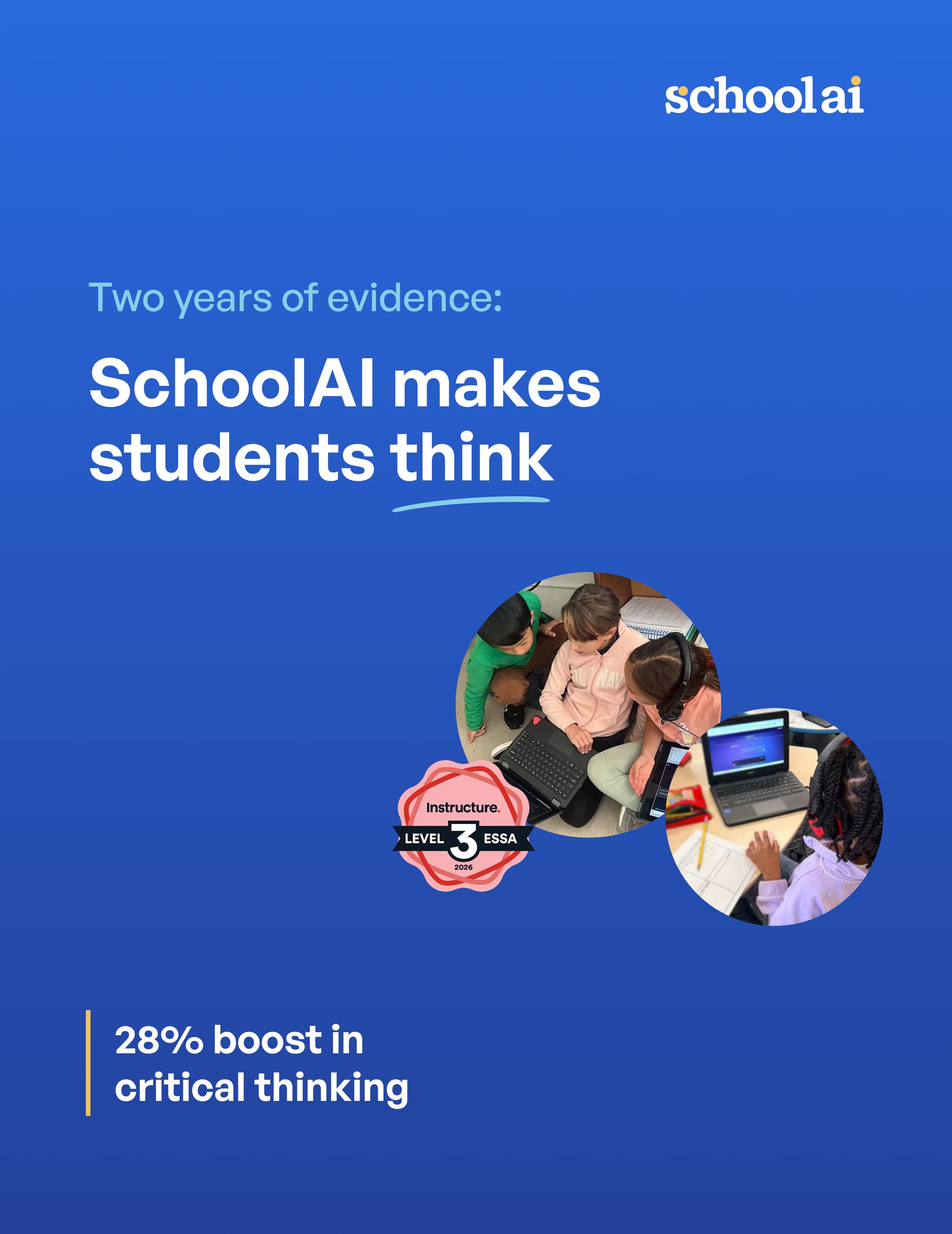
A two-year study of 13,882 student-AI conversations shows a 28% boost in critical thinking and earns ESSA Level III certification.
Read article