Coaching teachers to use AI tools for ongoing growth
See how to coach teachers on AI tools using data-backed insights, reflection prompts, and human-centered feedback.
Stephanie Howell • Jan 9, 2026 • Updated Aug 7, 2026
Instructional Coaching & Professional Learning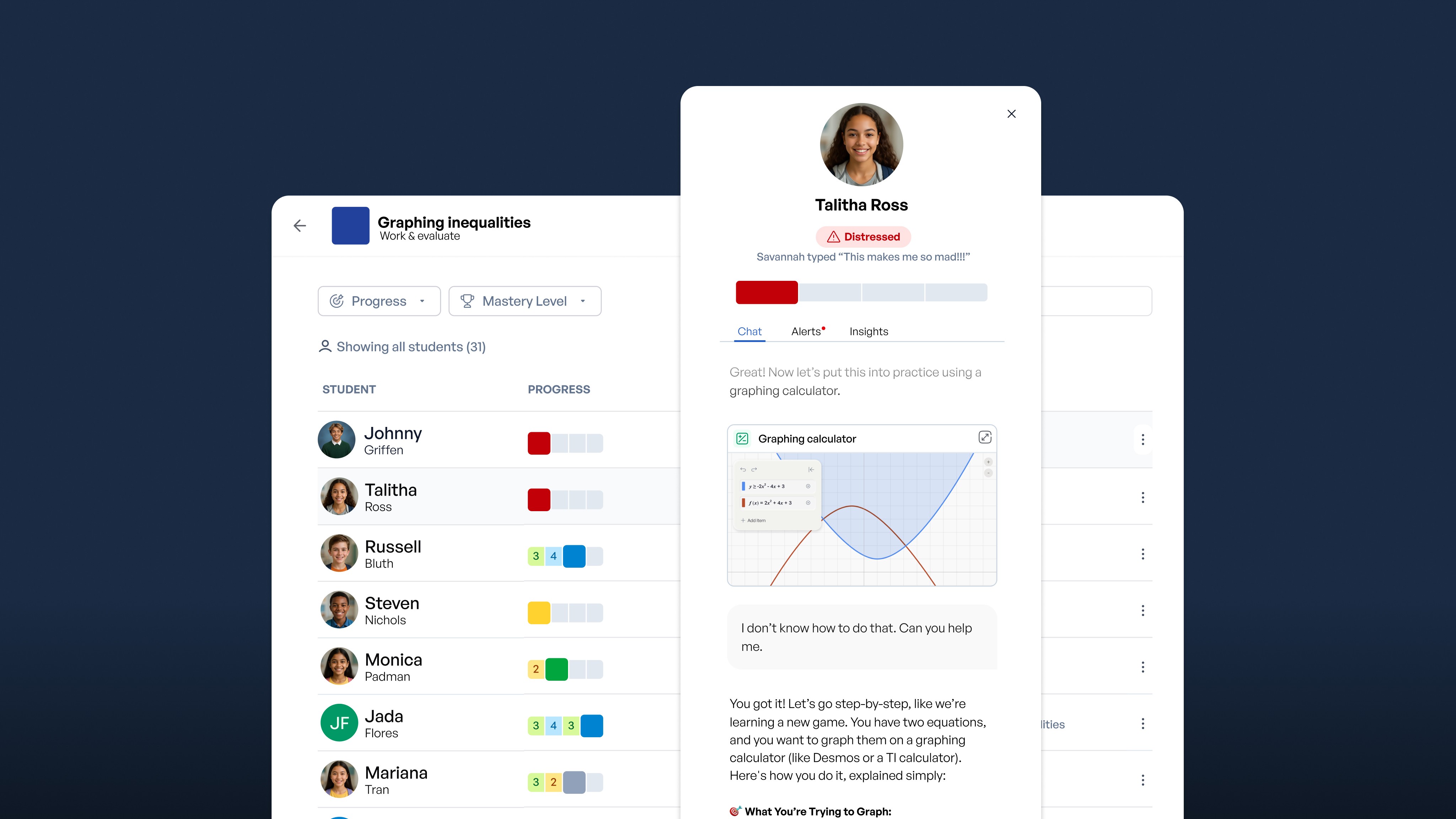
Key Takeaways
-
AI coaching surfaces patterns in questioning, wait time, and student talk that human observers often miss
-
Recording, reviewing, and adjusting instruction in short cycles, then meeting with a coach, drives measurable improvement in classroom practice
-
The best AI coaching pairs data insights with human expertise, preserving the relationships that drive growth
-
Start small with volunteers and one focus area, then scale based on honest feedback and trust
-
Platforms that prioritize teacher control and data privacy see higher adoption and sustained use
Understanding AI coaching and how it differs from traditional approaches
Think of AI coaching as a teaching partner that's always available for your staff. It analyzes classroom patterns and guides teacher reflection between scheduled coaching meetings, giving your team data-backed insights. At the same time, instructional coaches continue building the relationships that matter most for growth.
AI coaching tools guide teachers through reflection cycles. They record a lesson, the system breaks down what happened, and they get specific questions to consider. Traditional coaching means waiting weeks for a coach to visit each classroom, then getting feedback days later. AI-powered coaching works with teacher schedules, upload a lesson at 10 PM and get insights by 10:05.
Most schools don't have enough coaching capacity; one coach often supports twenty or more teachers.
These platforms can process every word spoken in a classroom, applying consistent standards that help identify patterns human observers might miss. Some platforms use audio alone; others use full video. The questions feel personal because they come from actual classroom data: "What open-ended question could replace that yes/no check at the 3-minute mark?" or "Student talk dropped to 15 seconds here, what happened?"
A typical coaching cycle follows a simple rhythm: teachers record a lesson, review the insights, try one new strategy in their teaching, record again to check progress, and then meet with their instructional coach to discuss what's working. This pattern keeps teachers moving forward without overwhelming already packed schedules.
Traditional coaching vs. AI-supported coaching
The contrast shows why schools add AI coaching rather than replace what works.
-
Feedback timing: Traditional coaching waits weeks for a follow-up. AI coaching turns around insights in minutes.
-
Coverage: A coach observes each teacher a few times a year. AI coaching reviews every recorded lesson.
-
Consistency: Human observation varies by observer. AI coaching applies the same criteria every time.
Key benefits of AI coaching for your teachers and coaching program
Picture this: your teachers finish a long day and, instead of waiting weeks to decipher observation notes, find clear insights about today's lesson waiting for them. That's the shift AI coaching makes, turning classroom moments into immediate, actionable feedback for your entire staff.
-
Supports teacher reflection without adding to your workload: Tools can let teachers upload lesson videos and receive AI-guided prompts for self-reflection. They review feedback on their own schedule, making the process feel more reflective than evaluative. For example, imagine one of your fifth-grade teachers using the pause-and-replay feature to notice she's answering questions too quickly; she could increase her wait time the very next day without needing additional coaching intervention from your team.
-
Provides consistent, data-backed feedback across your staff: Platforms analyze classroom conversation patterns that human observers often miss. Teachers see exactly which questions sparked student discussion, making feedback actionable.
-
Makes your coaching conversations more productive: When your instructional coaches walk into classrooms with pre-analyzed data from previous sessions, they skip the surface-level small talk and dive into meaningful dialogue. AI summaries point coaches toward teacher breakthrough moments and challenges, saving prep time for everyone.
-
Generates thoughtful reflection prompts for teachers: Technology transforms raw numbers into reflection questions like "Which student voices were missing during partner-share?" or "How might rephrasing this question invite multiple solution paths?" These prompts lead to richer discussions between teachers and coaches and yield concrete next steps.
-
Extends coaching to subject-specific instruction: reading for decoding practice, math for reasoning.
How to implement AI coaching in your school
The schools seeing real results don't start with district-wide rollouts. They begin small, listen carefully to teacher feedback, and build trust before scaling up. The numbers back this approach: in Indiana's 2023-24 AI platform grant, 53% of participating teachers rated their experience as upbeat after starting with focused pilots. Here's how that process typically unfolds in practice.
Start with a few willing teachers
Pick a handful of volunteers who are curious and already record lessons sometimes. Give them one focus area, questioning strategies, for example, and an eight-week window to try the tool. Have them record one lesson per week and upload it for analysis. Have each volunteer set one specific goal for their next lesson.
For example, imagine a teacher piloting an AI coach with her fifth-grade math class, and the platform flags that she waited less than 1 second after asking a question. With that insight, she practices longer wait times and sees students who rarely spoke by week six raise their hands.
Expand with teacher mentors
Once early results look promising, widen the circle. Invite pilot teachers to mentor peers. Their firsthand stories ease skepticism more than any presentation ever could. These early adopters often become your program's peer champions. Provide short workshops so new users can upload a video, read the feedback, and set a goal in under 30 minutes.
Early research on AI-enhanced coaching shows that pairing automated data with human coaching support helps teachers act on feedback about their questioning strategies more consistently than data alone, reinforcing why starting small and refining your approach pays off.
Connect to existing professional development
Use anonymized data to spot common growth areas across your staff; for example, several teachers may struggle with wait time or transition pacing. Connect these findings to your current coaching framework or evaluation rubric so the feedback feels familiar rather than like another new initiative.
Create learning communities where teachers voluntarily share clips that show progress, celebrate wins, and troubleshoot challenges together. Always clarify how data stays private: individual teacher data remains confidential unless they choose to share it, and the goal is growth, not evaluation.
Scaling AI coaching district-wide
Moving from a pilot to a full building takes more planning than simply opening the tool to everyone.
-
Confirm devices and infrastructure can handle every new classroom.
-
Build a short onboarding path so teachers can record, review, and set a goal quickly.
-
Let peer champions from the pilot lead building-level introductions.
Measuring impact through evidence and feedback
You already track student progress through test scores and observations. Schools adopting AI-supported coaching typically see faster teacher improvement cycles and more consistent instructional quality across classrooms. AI coaching simply adds another lens, one that helps your teachers spot patterns faster and adjust their instruction while the learning is still fresh in everyone's mind.
Most platforms turn classroom moments into searchable data, lesson transcripts, talk-time percentages, and questioning patterns. Before any recording happens, ensure teachers get written consent and explain why you're collecting data. Track research-backed indicators like question depth, wait time, and student talk ratios. Set clear rules about what should never enter an outside AI tool.
The Overdeck Family Foundation recently funded studies showing digital coaching can improve student reasoning and engagement. Set achievable benchmarks for your staff, maybe increasing the use of open-ended questions by 10% over six weeks.
Make data actionable through monthly check-ins with your instructional coaching team. Review improvements and challenges across classrooms. When coaches meet with teachers in PLCs, lead with growth and have teachers share successful clips. Celebrate visible wins; a line graph moving upward reminds everyone that the work is paying off.
How SchoolAI supports ongoing teacher learning
Your teachers need coaching support that fits their actual work lives, not an idealized version. SchoolAI provides practical tools that put teachers in control of their professional growth while giving you the oversight and insights to guide your program effectively.
Your teachers can create private Spaces for coaching conversations. They can then upload lesson recordings and add PowerUps to help spot patterns in their questioning or talk time. For example, a teacher can review AI-generated notes before meeting with their instructional coach. They'll be able to walk into that session with actual timestamps and specific moments to discuss, making your coaching conversations more productive.
Mission Control gives your coaches a dashboard view across multiple classrooms without the need for endless scheduling. While students work in Spaces, coaches see learning patterns in real time and can identify which teachers need support.
Privacy stays protected district-wide. SchoolAI meets FERPA, COPPA, and SOC 2 standards. Teachers control what they share, while you maintain the compliance oversight your district requires.
Moving forward with AI-supported coaching
AI coaching transforms how your teachers enhance their professional practice by turning classroom data into actionable insights. When you integrate technology with human expertise, you preserve the empathy and contextual understanding that only personal coaching interactions provide, while digital tools offer the precision and consistency your program needs.
AI platforms provide practical solutions for instructional leaders aiming to maximize teacher growth. By blending data-driven insights with human coaching expertise, these tools ensure teachers maintain control and choice in their professional development journey. At the same time, you gain the visibility to support them effectively.
That same commitment to teacher control extends into the classroom. SchoolAI provides safe, classroom-ready AI where students learn within teacher-designed, guardrailed experiences, and educators get real-time mastery data showing whether students are actually achieving the outcomes that matter.
Ready to see how AI coaching can scale your professional development efforts? Explore SchoolAI or request a demo today to discover how Spaces, Mission Control, and our coaching-focused tools help districts like yours build sustainable, teacher-led growth systems.
Frequently Asked Questions
AI coaching analyzes your recorded lessons to identify patterns in questioning techniques, wait time, and student talk ratios. The system provides reflection prompts based on your actual classroom data, helping you spot improvement opportunities between scheduled coaching sessions. You stay in control of your goals and data while getting 24/7 support that complements, not replaces, human coaching relationships.
Start with an 8-week pilot involving willing volunteers focused on a specific area, such as questioning strategies. Collect teacher feedback regularly, refine your approach based on real experiences, then gradually expand to more grades and subjects. Pair AI insights with regular check-ins with your instructional coaches to keep relationships central. Most successful implementations follow this pilot-refine-scale sequence to build genuine teacher buy-in and trust.
Reputable platforms encrypt data and follow FERPA, COPPA, and SOC 2 standards. You control what gets stored, shared, or deleted through clear consent forms and user dashboards. Teachers can change privacy settings at any time to determine exactly how their classroom data is used. Transparency about data handling builds trust and ensures compliance with educational privacy requirements.
Licensing fees vary by platform and district size, but the primary return comes from immediate feedback that reduces manual observation time and speeds up instructional adjustments. Research shows targeted coaching can improve questioning quality and student engagement, benefits that typically outweigh subscription costs. Calculate ROI by considering coaching hours saved, faster teacher improvement cycles, and enhanced student outcomes.
Teachers show cautious optimism about AI coaching. Recent surveys indicate that 60% of teachers already use digital tools, and a majority expect technology to impact education within five years. Teachers appreciate self-paced reflection and data-rich conversations, especially when they maintain control over their goals and how insights are used. Trust builds when platforms demonstrate explicit privacy protections and respect teacher expertise.

About the author
Stephanie Howell
Education Specialist at SchoolAI, Former Teaching and Learning Coordinator
Stephanie is a former teaching and learning coordinator with a background in instructional coaching, classroom management, and curriculum development. She holds a master's in educational leadership from Western Governors University. At SchoolAI, she works with schools to lead AI adoption and professional learning, turning new tools into classroom-ready practice that teachers can put to work right away.
Transform your teaching with AI-powered tools for personalized learning
See how every student is doing, and know what to do next.