How timely feedback boosts student motivation
Learn how timely feedback boosts student motivation by reinforcing learning, building confidence, and helping students act on guidance while work is still fresh.
Katie Ellis • Jan 5, 2026
Assessment & Learning Evidence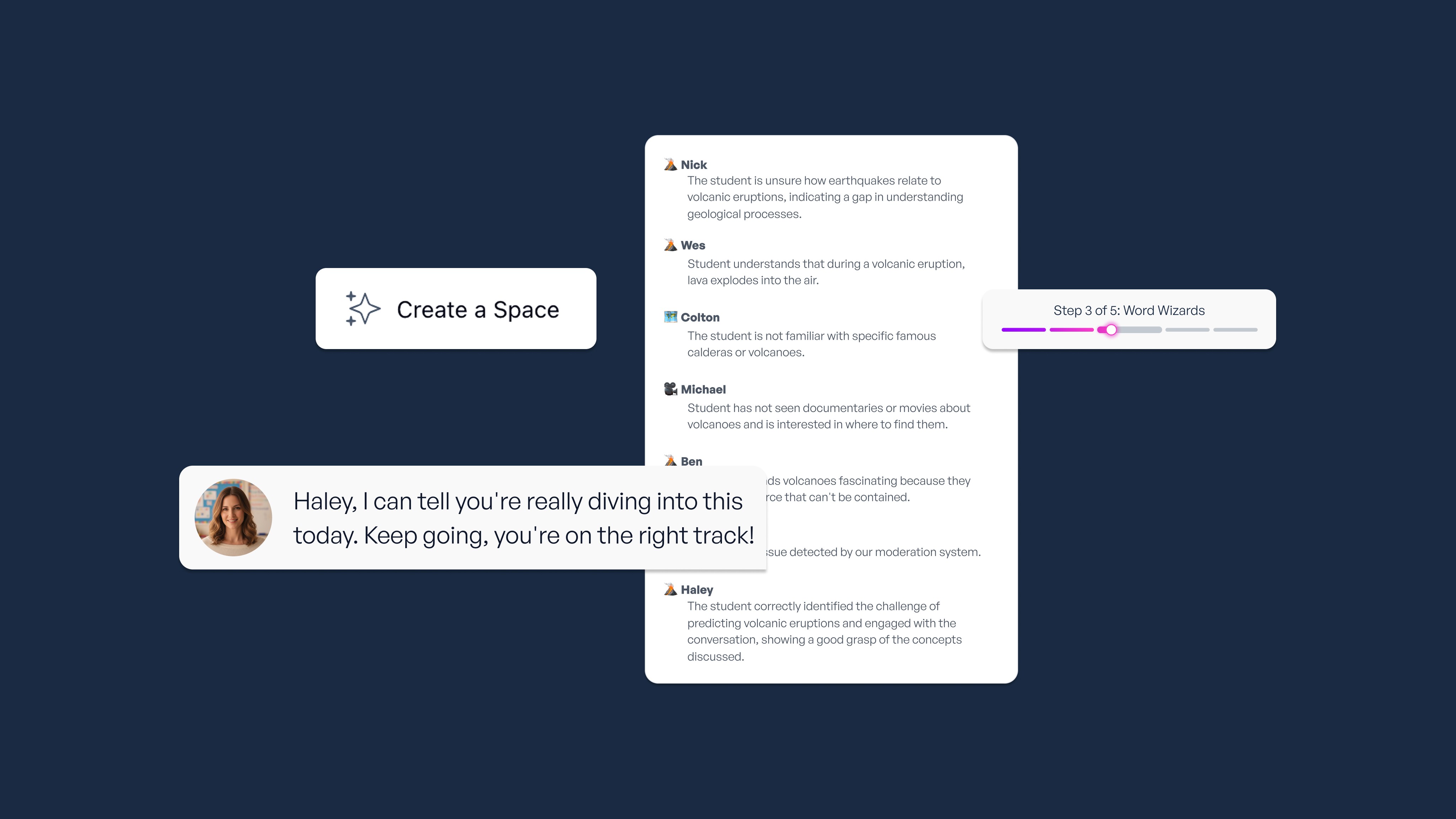
Key takeaways
-
Quick feedback can significantly boost achievement compared to delayed comments, with effect sizes rivaling those of other teaching strategies.
-
When students receive feedback while the work is fresh, they can actually use it to improve without needing to reteach concepts
-
Prompt responses can build student confidence and encourage ownership of learning, rather than passive grade-waiting
-
AI tools like SchoolAI can help you give quality, rubric-based feedback in real-time without adding to your workload
A student turns in their essay on Friday, eagerly checking their inbox all weekend, only to receive feedback two weeks later when they've already moved on to the next unit. This scenario plays out in classrooms everywhere, yet it represents one of the biggest missed opportunities in education.
"Timely feedback" refers to comments, cues, or scores given while work is still fresh, ideally within minutes to a few days. Research shows that well-timed responses can significantly boost learning because quick feedback reinforces good thinking immediately, helps students adjust before mistakes become habits, and keeps their working memory focused on the learning process.
6 ways fast feedback keeps students motivated and improving
Quick responses work on multiple levels to keep students engaged and improving. When you give feedback while work is still fresh, students can actually use your guidance instead of wondering what they were thinking days ago. Here's how timing transforms learning:
1. Help students revise while the work is still fresh
When students receive feedback while their work is still fresh in their minds, they can actually use it. If you tell a student what went wrong three days later, they've already mentally moved on. But catch them the same day? That's when real learning happens. Students naturally want to improve their work, compare it to the goal, and try again. Quick responses keep that cycle moving.
The best feedback answers three questions while students still remember their work: Where am I now? Where do I need to go? What's my next step? For example, when a fourth-grade teacher reviews fraction exit tickets during lunch. If she spots a pattern with denominators, she starts the next morning with a focused ten-minute lesson. Students can still remember yesterday's confusion, so the correction clicks immediately.
2. Reinforce accomplishment and build confidence
When students see their results immediately, that response feels like a small win. It's immediate proof that their effort has paid off, which motivates them to keep trying. When you tell a student, "Your reasoning here is clear and precise, nice work," you're naming a skill they can own and use again.
The action happens when you combine celebration with direction. Try saying things like,* "You used vivid verbs; next, choose one detail to tighten your ending,"* or "Your fraction model is accurate, now see if you can simplify." Each response confirms progress while pointing to the next step: no empty praise, just real recognition paired with clear guidance.
3. Give feedback before students forget what they did
Your students' working memory fills up fast. When you give feedback while the task is still fresh in their minds, students can actually use your guidance instead of trying to remember what they were thinking three days ago. This timing matters because students don't have to dig back through forgotten steps.
Quick responses also feel immediately relevant. When days pass between effort and response, learners must retrieve old thinking before they can act on your advice. That retrieval process drains mental energy and kills motivation.
Try this approach: End a lesson with a quick digital exit ticket, scan results as students pack up, and address one common mistake before the bell rings.
4. Enhance clarity, direction, and goal setting
Great feedback answers three simple questions: Where am I going? How am I going? Where to next? When you answer those questions quickly, while students still remember their work clearly, they can connect your words to what they just tried. Abstract goals become clear, doable steps.
Clear direction also prevents students from feeling overwhelmed. Instead of wondering what to fix first, a quick note like "Your thesis is clear, now focus on adding more evidence" tells them exactly what's working and what comes next.
Try this two-sentence approach: sentence one names a strength, and sentence two outlines the corresponding action. Comment banks or short audio clips help you create these micro-guides fast.
5. Don't let slow feedback kill motivation
Delayed feedback can reduce effort and engagement. Students work hardest when they see a quick payoff for effort. When days stretch into weeks, the link between yesterday's work and today's comments disappears. The task feels less valuable. Delay also creates problems; students must dig up half-forgotten thinking just to understand their notes.
Long waits can also breed uncertainty and anxiety. Some students even stop checking for responses, a pattern that becomes hard to reverse. When quick turnarounds just aren't possible, use a triage approach: address the wobbly topics first by addressing misconceptions before they become cemented. Batch whole-class trends, a two-minute mini-lesson beats 30 identical comments.
6. Fast responses show that mistakes are part of the process
Immediate responses send a clear message: "Learning is a process, not a verdict." When you respond while their work is still fresh in students' minds, mistakes feel like stepping stones rather than roadblocks. This fosters the growth mindset that encourages kids to keep trying.
Quick responses also tap into what students need most: feeling competent and in control of their learning. When they receive your notes while their thinking is still active, they can compare the feedback with their original goals and determine what to try next. This self-directed adjustment process empowers students to become partners in their own progress.
For example, a ninth-grade teacher leaves one-minute audio comments the same day she reads essays. Students must revise just one paragraph and explain the changes they made before the next class. By Friday, even her most reluctant writers were asking,* "What should I work on next?"*
How SchoolAI helps you deliver timely feedback
SchoolAI's platform provides real-time insights, allowing you to respond to student needs as they emerge, not days later. Here's how specific features support faster, more targeted feedback:
SchoolAI feature
How it supports timely feedback
What you control
Shows live student progress through agenda steps and automatically sorts struggling students to the top of your "Help Center"
You decide which students need immediate intervention and what support to provide
Individual student chat view
Access every student's chat transcript to see how they arrived at answers and identify misconceptions in real time
You review conversations and determine if AI feedback needs adjustment
AI-generated insights
The platform creates summaries highlighting each student's strengths, areas for improvement, and recurring patterns
You review AI analysis and decide which insights to act on
Smart groups
Automatically groups students based on learning demonstration using AI analysis of their work
You choose whether to use suggested groupings and what instruction each group needs
Students work through structured learning activities while you monitor progress in real time
You design the learning path and adjust based on what Mission Control reveals
The platform handles pattern recognition and data organization while you focus on the human decisions that matter: who needs help right now, what that help should look like, and how to move each student forward.
Start giving faster feedback today and see the difference
Quick responses drive student motivation through continuous improvement cycles, confidence building, fresh learning connections, clear goal-setting, and fostering ownership of learning. Large classes and packed schedules will always challenge turnaround times; the solution isn't more extended hours, it's smarter systems.
Try this with your next assignment: shorten your feedback window, repeat the process, and watch both motivation and confidence grow. Ready to scale this approach? Explore SchoolAI to see how real-time insights and adaptive feedback help you reach every student without burning out.
Transform your teaching with AI-powered tools for personalized learning
See how every student is doing, and know what to do next.