Classroom AI solutions for schools: Building a digital classroom that works
Classroom AI solutions that cut grading time, personalize learning, and keep teachers in control.
Tori Fitka • Nov 25, 2025 • Updated Jul 20, 2026
Teacher Workflow & Planning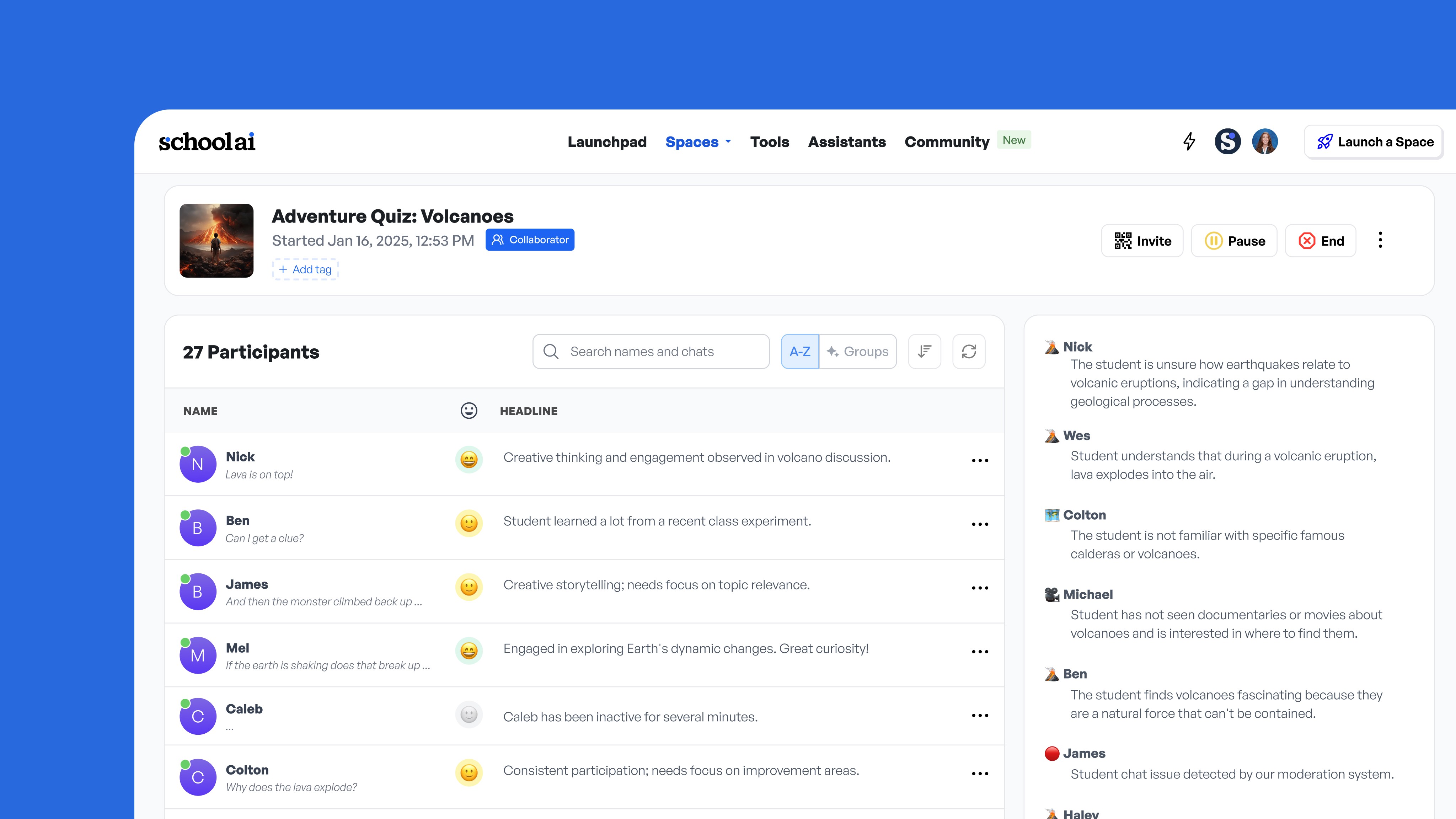
Key takeaways
-
Effective AI learning platforms tackle four key teacher pain points: differentiation, time drain, invisible learning gaps, and accessibility.
-
Start implementation with a small pilot in one class, collect feedback, then scale gradually to avoid overwhelming teachers and systems.
-
Prioritize tools that integrate with your existing systems to reduce tech headaches and increase teacher adoption.
-
Always maintain human oversight of AI recommendations while benefiting from automated routine tasks.
You've been there: it's 10 p.m., you're still grading essays, tweaking tomorrow's lesson for three reading levels, and hunting down missing grades. AI tools keep popping up, each claiming to fix everything, but most just add another login. According to a recent study, nearly half of teachers have tried AI, yet their workload hasn't budged.
If you've thought, "Great, another tool to master," you're not alone. The real challenge isn't finding technology. It's finding technology that lightens your load, keeps students engaged, and protects privacy.
That's where this roadmap comes in. We'll walk you through a practical approach for choosing and using intelligent learning platforms step by step, buzzword-free, with you staying in control. Let's cut through the noise and get your evenings back.
What an AI learning tool really means in 2026
Think of an intelligent learning platform as software that studies patterns in student work and helps you act in real time. Unlike regular edtech that just hosts content, these systems learn from every click and question to personalize support, flag misunderstandings, and give you time back.
What artificial intelligence actually does in the classroom
At its core, artificial intelligence in education is software trained to recognize patterns, most often in how students answer questions and which mistakes repeat. It doesn't think the way a person does. It compares new work against thousands of examples, then suggests a next step, while you decide what to do with it.
Three main types dominate today's classrooms: adaptive tutors that adjust difficulty on the fly, automated feedback engines that return specific comments instantly, and real-time analytics dashboards showing who needs help now.
Intelligent platforms focus on amplifying teachers rather than replacing them. When these systems handle routine tasks, teachers reclaim hours weekly that they can then spend on direct student work. The human connection stays central, with algorithms handling the busywork.
Headline: Classroom AI Teachers Trust
Description: Safe, teacher-guided AI with real-time mastery data. See it in action.
CTA: Request a Demo
4 core features of high-impact AI learning tools
You already juggle dozens of apps, so only features that make teaching easier and learning stronger matter. These four essentials tackle teachers' biggest pain points: differentiation, time drain, invisible learning gaps, and equity.
Give every student their own learning path
Adaptive learning watches how students interact with content, then adjusts lessons in real time. In practice, students tend to gain more ground when content shifts before boredom or frustration kicks in.
An example of where this could be applied could be an algebra class. Students who breeze through warm-ups jump to real-world problems about phone plan costs, while those who struggle get scaffolded hints and video refreshers. By the bell, everyone has practiced at their own challenge level.
Save time on the work that drains you
Effective platforms handle clerical tasks: auto-grading quizzes, drafting lessons, and translating emails. For example, you could set up automated exit ticket grading on Thursday night and spend those saved 20 minutes Friday morning conferencing with struggling students. That face time is where learning actually shifts. Tools built for independent practice, like PowerUps, let students create and explore on their own, freeing you to circulate and coach instead of managing worksheets.
Spot problems before they become disasters
Data that arrives after the unit test is an autopsy. Data that pings you mid-lesson is intervention time. Smart dashboards track mistakes, pace, and confidence as students work, helping schools catch struggling students days earlier than before.
Picture students drafting persuasive essays while SchoolAI's Mission Control flags three learners misusing evidence. Their chats move to the top of your help queue. You coach them on citations and watch their next paragraphs improve immediately. Teaching becomes proactive when insights live in your line of sight.
Make learning work for every single student
Great technology includes text-to-speech, live captions, and interface adjustments while protecting student data. During history presentations, automatic captions can help hard-of-hearing students follow along, while instant translation lets English learners ask questions in their first language.
When these four features work together, intelligent learning tools become the quiet partner helping everyone learn better each day.
How to evaluate classroom AI solutions before you buy
Classroom AI solutions can feel interchangeable, since most vendors sound alike: personalized, time-saving, teacher-friendly. A short checklist helps you compare tools on what matters most.
-
Standards fit: aligns with curriculum you already teach, not hours of retrofitting
-
Integration: connects to your LMS, SIS, Google Workspace, or Microsoft 365 instead of adding another login
-
Security: publishes certifications like FERPA, COPPA, or SOC 2
-
Accessibility: text-to-speech and captioning built in, not sold as a paid add-on
-
Human oversight: teachers can review, edit, or override every AI suggestion
-
Evidence and support: the vendor shares real outcomes data along with staff training
Implementation roadmap: From pilot to whole-school rollout
New platforms don't fail because of bad technology. They fail because schools try too much too fast. This step-by-step approach gives you room to learn and adjust before full implementation.
Phase 1: Pedagogy-first planning
Before touching any settings, connect the platform to standards you already teach. Form a small team including teachers, IT support, and an administrator. List classroom problems you want to solve and how you'll measure success: less grading time, higher quiz scores, or faster intervention.
Make a list of your current apps and systems. This snapshot prevents buying duplicate features and reveals potential integration issues. Let teaching goals lead, with technology following.
Phase 2: Two-week pilot
Start with one class or subject. During this limited trial, run normal lessons while the platform works in the background. IT watches for technical issues while administrators monitor privacy settings.
Daily quick notes about time savings and challenges matter more than formal reports. Schedule a mid-pilot check-in to fix issues and gather student feedback. Success looks like: teachers using basic features without help, no data problems, and clear student benefits.
Phase 3: Iterate and refine
Turn pilot notes into improvements. Analyze performance data, student work, and teacher feedback together. Include a skeptical colleague to help spot blind spots.
Success metrics shift from "does it work" to "does it help students learn." Aim for measurable results like reduced grading time or improved formative assessments. Update training materials, connection guides, and privacy documents before expanding further.
Phase 4: Scale thoughtfully
With evidence in hand, invite more staff. Keep teacher control central: share ready-to-use lessons but allow customization. Budget for additional resources and offer brief professional development during existing meetings rather than scheduling separate workshops.
Track success through teacher time saved, student growth in core standards, and absence of privacy or data problems. Celebrate wins and address issues quickly. A measured rollout creates sustainable improvement without overwhelming your team.
Equity, accessibility and ethical guardrails
When intelligent learning platforms enter your classroom, students and families need assurance that:
<!-- unsupported: table -->During a writing project, you might enable real-time translation for multilingual learners while reviewing AI suggestions before they reach students. These simple checks keep learning fair and transparent for everyone.
Troubleshooting and continuous improvement
Even the best plans hit snags. The key is catching problems early and fixing them fast.
Systems sometimes provide incorrect information – always review results before sharing with students. Teachers can feel overwhelmed by new features. Start with one class, one feature, one week. Students might over-rely on automated help. Set clear boundaries between draft support and final work. Data transfer problems can create headaches. Test with a small class before full rollout.
Keep a shared document tracking problems and solutions. Review it regularly to spot patterns and make ongoing improvements.
How SchoolAI exemplifies the essentials
SchoolAI delivers on all four essentials we discussed above: personalization, teacher-friendly workflows, real-time insights, and strong security.
Personalization happens through Spaces, learning environments that adjust to each student's work. During a seventh-grade fractions unit, Spaces gave fast finishers complex word problems while struggling students received visual fraction tiles, all with one click.
My Space gives you a private planning room for brainstorming, while Spaces can be dropped directly into your LMS. Teachers report saving about 10 hours weekly, time now spent on small-group instruction.
Mission Control flags who's stuck and which misconceptions keep appearing. You don't wait for tomorrow's exit ticket; you see patterns now and intervene immediately.
Independent research backs this up. A two-year study of over 13,000 student-AI conversations in Utah's Jordan School District found teachers who build six or more Spaces see far more student reasoning with AI, a 28% boost in critical thinking that earned ESSA Level III certification. A Stanford University SCALE Initiative review of 150,000+ teacher prompts found roughly 40% focused on aligning curriculum to standards.
SchoolAI meets all security requirements with FERPA, COPPA, and SOC 2 compliance, with 1EdTech certification while keeping you in control of all decisions.
Your path forward
Success with intelligent learning platforms comes from choosing the right systems and taking measured steps rather than rushing into school-wide changes. Start by evaluating how platforms align with your curriculum and existing systems. Choose a pilot class to observe real impacts, then create a strategic implementation plan using the four-phase framework.
These thoughtful integrations can transform educational experiences for both teachers and students, creating an environment where technology serves your teaching goals rather than complicating them. SchoolAI provides safe, classroom-ready AI where students learn within teacher-designed, guardrailed experiences, and educators get real-time mastery data showing whether students are actually achieving the outcomes that matter. That combination of safety, teacher control, and real evidence is what turns a promising pilot into a tool your whole school keeps using.
Ready to see how SchoolAI can help you reclaim your evenings and reach every student? Request a demo or sign up today to explore our tools designed by teachers, for teachers.

About the author
Tori Fitka
Education Specialist at SchoolAI, Former Digital Learning Coach
Tori spent years as a digital learning coach before joining SchoolAI, helping teachers build confidence with new tools through hands-on practice rather than theory. She now works directly with schools to support AI adoption, designing professional learning that starts where teachers are and gives them something they can use the next day.
Transform your teaching with AI-powered tools for personalized learning
See how every student is doing, and know what to do next.