Machine learning for teachers: A practical guide for educators
Learn how machine learning for teachers works in your classroom. Discover practical ML tools, time-saving examples, and how to evaluate AI platforms for your students.
Jennifer Grimes • Mar 19, 2026
AI Literacy Safety & Policy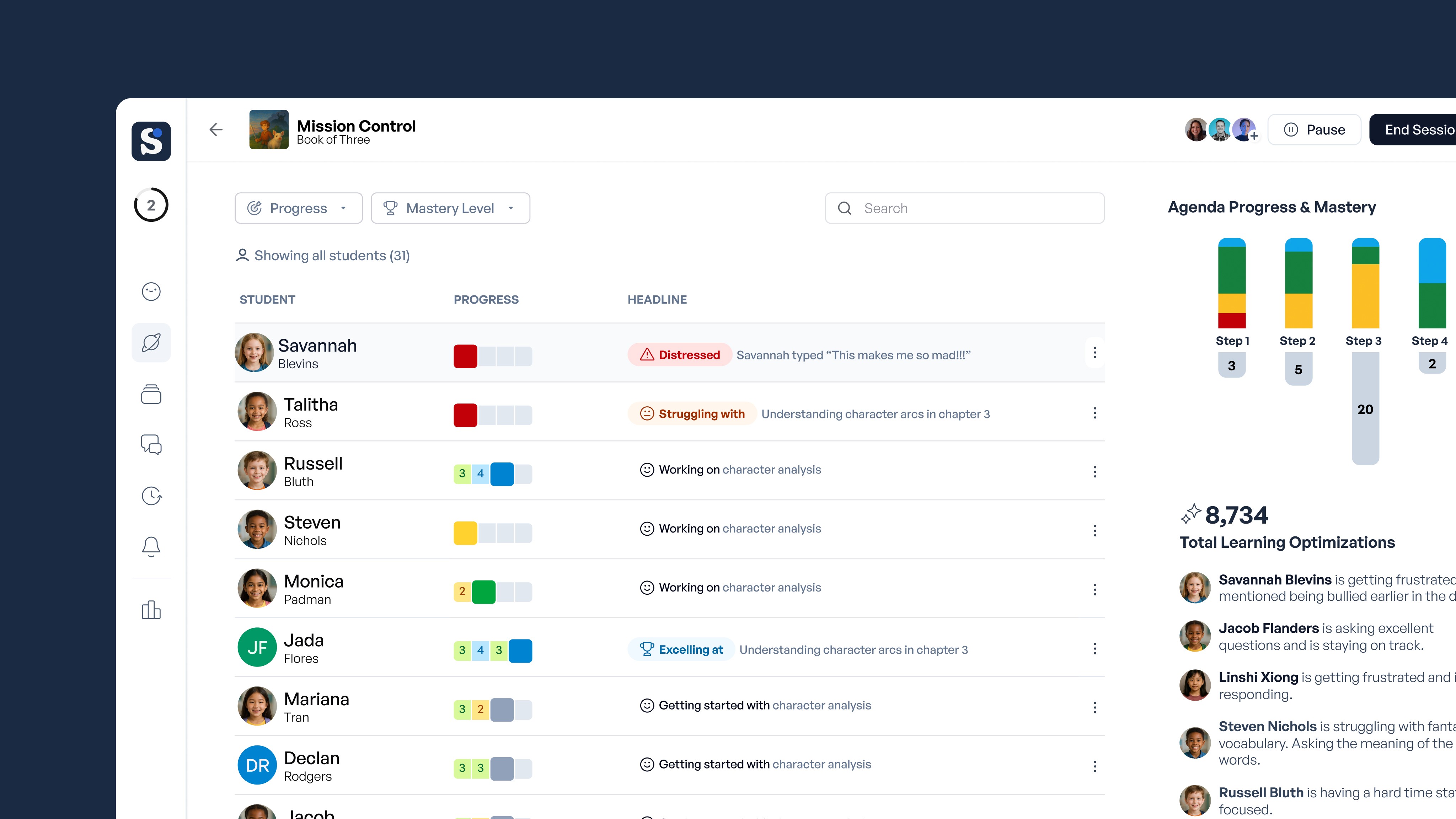
Key takeaways
-
ML tools can shift 20 to 40 percent of your time from paperwork to direct student interaction, giving you more time for relationships and less time for admin tasks you didn't become a teacher to do
-
Machine learning already powers tools you use daily, from adaptive quizzes adjusting difficulty to writing feedback responding instantly, giving you superpowers you might not have realized were AI
-
Understanding ML basics helps you spot when adaptive tools make mistakes and when to trust your teaching instincts instead
-
Check data privacy and FERPA compliance before adopting new tools. Ask vendors what student data they collect and who can access it
-
Starting small with one tool or one class helps you build confidence without feeling overwhelmed by new technology
Machine learning sounds like something that belongs in a computer science lab, not your classroom. But here's the reality: you're already using it.
When students get instant feedback on practice problems or quizzes adjust difficulty based on responses, that's machine learning at work. It's already here, embedded in tools you use daily. But AI feels like the Wild West, with new tools promising miracles while you're trying to figure out which ones actually work.
The challenge? A RAND Corporation study found that while 69% of high school teachers now use generative AI, less than half received any professional development on it. When you understand ML basics, you make better decisions about which tools to trust, how to spot limitations, and when to override automated recommendations with your professional judgment.
What is machine learning?
Machine learning is pattern recognition at a massive scale. The system analyzes thousands, sometimes millions, of examples to identify patterns, then applies those patterns to make predictions or decisions.
After years of teaching fractions, you spot when students add denominators incorrectly. Machine learning works the same way but analyzes millions of responses instead of dozens.
ERIC research shows AI literacy for educators breaks down into three practical dimensions: understanding what AI can do, grasping how it works at a conceptual level, and knowing how to interact with these systems effectively. You don't need to understand complex algorithms. You need to recognize when ML is making decisions that affect your students and know how to evaluate those decisions critically.
Here's how it works in practice. A student works through math problems while the system tracks response speed, accuracy, and error types. The system analyzes these patterns to predict mastery levels, then automatically adjusts difficulty, like you'd differentiate based on student work, but happening in real time for every student simultaneously.
5 machine learning in education examples that save teachers time
-
- Adaptive Quizzes That Adjust on the Fly
When your struggling 5th grader automatically receives simpler fraction problems while their advanced peer gets multi-step word problems, that's ML adjusting difficulty in real time.
-
- Instant Writing Feedback That Never Sleeps
Students write paragraphs and instantly receive feedback on vocabulary and sentence structure. The ML system analyzes millions of examples to provide this guidance, freeing you to focus on ideas and argumentation. You didn't become a teacher to correct comma placement. You became a teacher to help students find their voice and develop their thinking. ML handles the mechanics so you can focus on what matters.
-
- Match Every Student to the Right Reading Level Instantly
ML systems analyze sentence structure, vocabulary difficulty, and other linguistic features to match texts to student reading levels, the same indicators you use when selecting books, but applied to millions of texts instantly, University of Washington research shows.
-
- Give Each Student a Personalized Learning Path
Two students in the same 7th-grade science class studying ecosystems receive different content sequences. The student who quickly mastered food chains moves to complex ecological relationships, while another receives additional practice with foundational concepts before advancing.
Modern ML systems can provide this branching support automatically based on student performance data. This approach also works well for machine learning for kids, introducing younger students to adaptive content.
-
- Early Warning Systems for Struggling Students
You receive an alert that three students consistently make the same mistake with negative numbers. The ML system identified this pattern across assignments before traditional assessments would, helping you intervene earlier, the CoSN report shows. This is what SchoolAI does. Its Mission Control feature shows exactly which students are stuck, what they asked their AI tutor, and where they need your help in one priority queue.
How to evaluate machine learning tools for your classroom
The Civil Rights Commission states teachers must "be aware of the limitations and capabilities of new technologies before the tools are implemented so that they can watch for potential issues, inaccuracies, and biased information."
Transparency matters in any ML system you use. When algorithms make recommendations about student progress or suggest interventions, you need visibility into how those decisions were made. Look for tools that show you the underlying data, not just automated conclusions.
The most effective ML tools provide specific types of transparency features: complete conversation logs when students interact with AI tutors, visibility into the patterns that triggered alerts about student struggles, and detailed interaction data showing exactly where students got stuck.
Ask these questions before you adopt any tool
Before implementing any new ML-powered platform, ask vendors these critical questions:
-
What student data do they collect? Get specifics, not just "engagement data" but exactly what information the system captures and stores.
-
How long is student data stored? Know retention periods and whether you can delete information when you're done with the tool.
-
Can they use student data to train their algorithms? Some vendors use your students' work to improve commercial products. You need to know if this happens.
-
Who can access the data? Understand whether third parties, researchers, or parent companies have access to student information.
-
What does the system show you about its decision-making? Look for platforms that reveal why content was recommended or how difficulty was determined.
Here's what this looks like in practice with SchoolAI's Mission Control. When evaluating tools, look for features like conversation transcripts and priority queues that show exactly how students interact with AI tutors. These transparency features give you the visibility you need to make informed decisions about whether the tool is actually helping your students or creating new problems.
Scale your expertise – Reach every student
You already know how to spot patterns in student work. That's teaching. Machine learning simply scales that expertise, helping you reach every student while keeping your professional judgment at the center.
Machine learning for teachers isn't about replacing what you do. It's about amplifying your impact, giving you real-time data on who needs help, automating the tasks that drain your time, and freeing you to focus on the relationships and instruction that brought you to teaching in the first place.
SchoolAI puts this into practice by showing you exactly what students ask their AI tutor and where they get stuck, all in one dashboard. You maintain complete visibility and control over every interaction. Try SchoolAI today to see how it works while you keep your professional judgment where it belongs: at the center of the learning experience.
Frequently Asked Questions
The 80/20 rule refers to splitting data so that 80% is used for training the model and 20% is reserved for testing. For teachers, this concept matters when understanding how adaptive learning platforms learn from student responses. The more quality data a system has, the better it predicts what each student needs next.
Yes. SchoolAI offers a free tier that gives teachers access to AI tutoring tools, conversation monitoring through Mission Control, and customizable learning spaces. You can also explore free tools like Google's Teachable Machine, which lets students build simple ML models without coding.
The best machine learning for teachers depends on your goals. For real-time student monitoring and personalized AI tutoring, SchoolAI provides transparency features that let you see every student interaction. Look for tools that offer complete visibility into how students engage with AI, allow you to customize guardrails, and integrate with your existing workflow.

About the author
Jennifer Grimes
Education Specialist at SchoolAI, Former Educator, ELL Educator
Jennifer is a former classroom teacher and ELL educator with 20 years in education. She spent much of her career designing curriculum, coaching teachers, and building professional learning for multilingual and diverse learners. At SchoolAI, she partners with educators to create learning experiences that are clear, doable, and built around meeting people where they are.
Transform your teaching with AI-powered tools for personalized learning
See how every student is doing, and know what to do next.