A study of 1,070 students across 36 schools finds that regular users report stronger engagement, deeper thinking, and more confidence in their future
SchoolAI surveyed 1,070 students across 36 schools in April 2026 to answer a simple question: does it matter how often a student actually uses the tool? Researchers compared students who rarely used SchoolAI or had never used it with those who used it monthly or more, measuring five areas of student life, from how they feel at school to how ready they feel for college and career. Students who used SchoolAI more often scored higher on all five, and the gaps held up after accounting for grade level and how long their teacher had used the platform.
The clearest differences showed up in how students feel about school itself. Among regular users, 74% said they were excited to use SchoolAI, compared to 49% of rare or never users. They were also more likely to feel safe trying new things and making mistakes (89% vs. 70%) and to feel like they belong at school (87% vs. 68%). One fifth grader in Raymore, Missouri put it plainly: "I can ask questions I'm too embarrassed to ask out loud."
Regular users also reported the habits that stronger learners rely on. They were more likely to keep going when work got hard (86% vs. 64%), to ask for help when stuck (86% vs. 68%), and to organize their time and materials (76% vs. 55%). These are the capacities students carry into every lesson, and they showed up far more often among students who used the tool regularly.
The single biggest gap in the study was about thinking. Monthly users were 23 percentage points more likely to say they ask questions about what they're learning (88% vs. 65%), and they more often looked for connections, weighed different perspectives, and tried more than one way to solve a problem. As a seventh grader in Indianapolis described it: "It does not just give you the answer. It gives you a question to see what you know about the topic." The tool works less like an answer machine and more like a thinking partner.
The pattern carried into how students see their schoolwork and their future. Regular users were 18 points more likely to say they understand their classwork (87% vs. 68%) and 19 points more likely to feel prepared for college or a career (81% vs. 63%). The highest agreement of any item in the entire study landed here: 93% of regular users said their abilities can grow with practice.
For school and district leaders, the takeaway is about dose, not just access. The benefits showed up most for students who used SchoolAI regularly, and how often a student used the tool mattered more than how long their teacher had been on the platform. The study is cross-sectional, so it shows a strong association rather than proof of cause, but the direction is consistent: across every measure, regular users reported double-digit gains. The report earned ESSA Tier 3 certification through external review.
Read the full study to see the complete results across all five domains, the survey items, and what the findings mean for AI in K-12 schools.
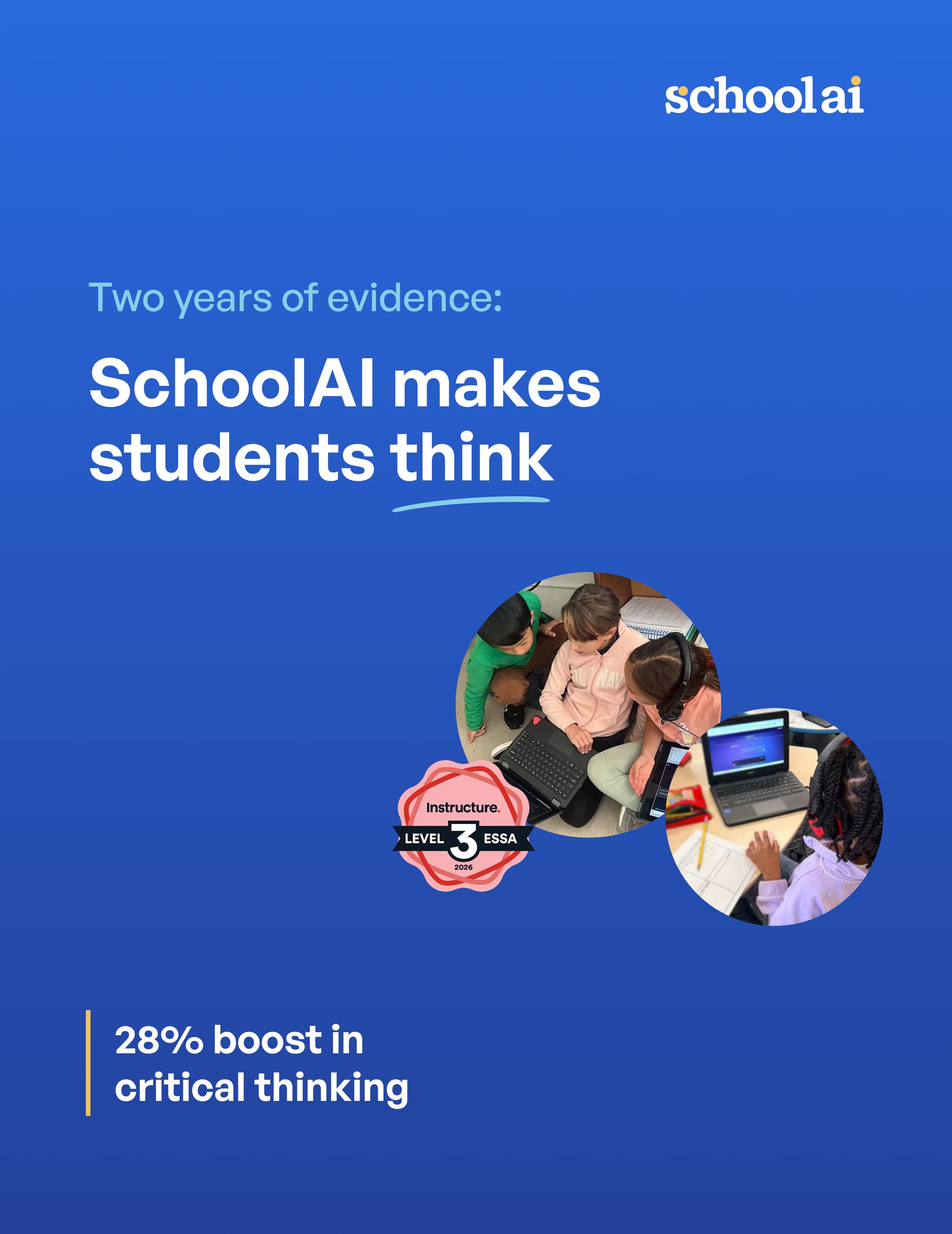
A two-year study of 13,882 student-AI conversations shows a 28% boost in critical thinking and earns ESSA Level III certification.
Read article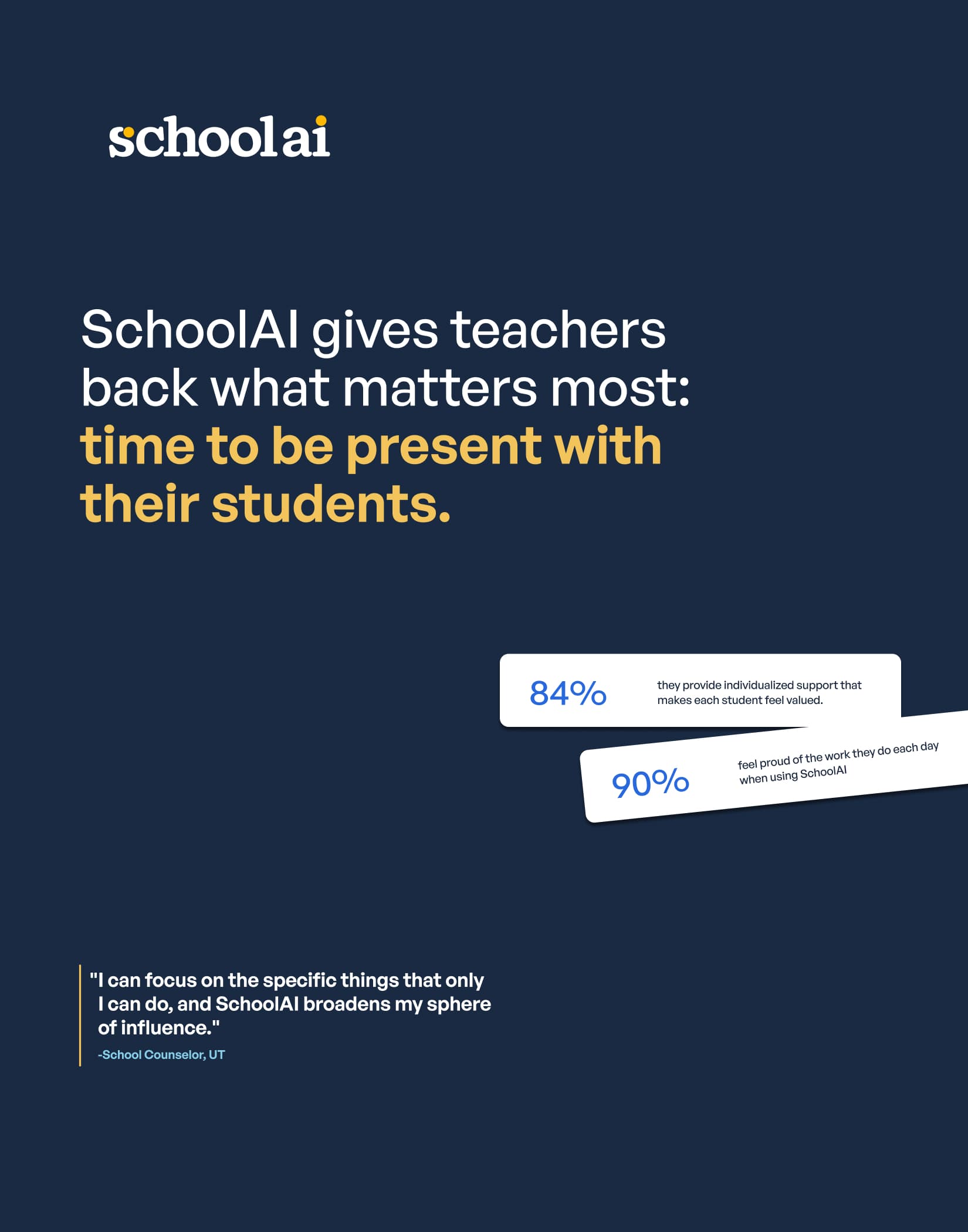
Survey of 756 K-12 teachers shows time saved goes straight back to students
Read article