AI tools with student privacy protections
Learn what to look for and best practices to keep student data safe when evaluating new AI tools for the classroom.
Jennifer Grimes • Jun 8, 2026 • Updated Oct 6, 2026
AI Literacy Safety & Policy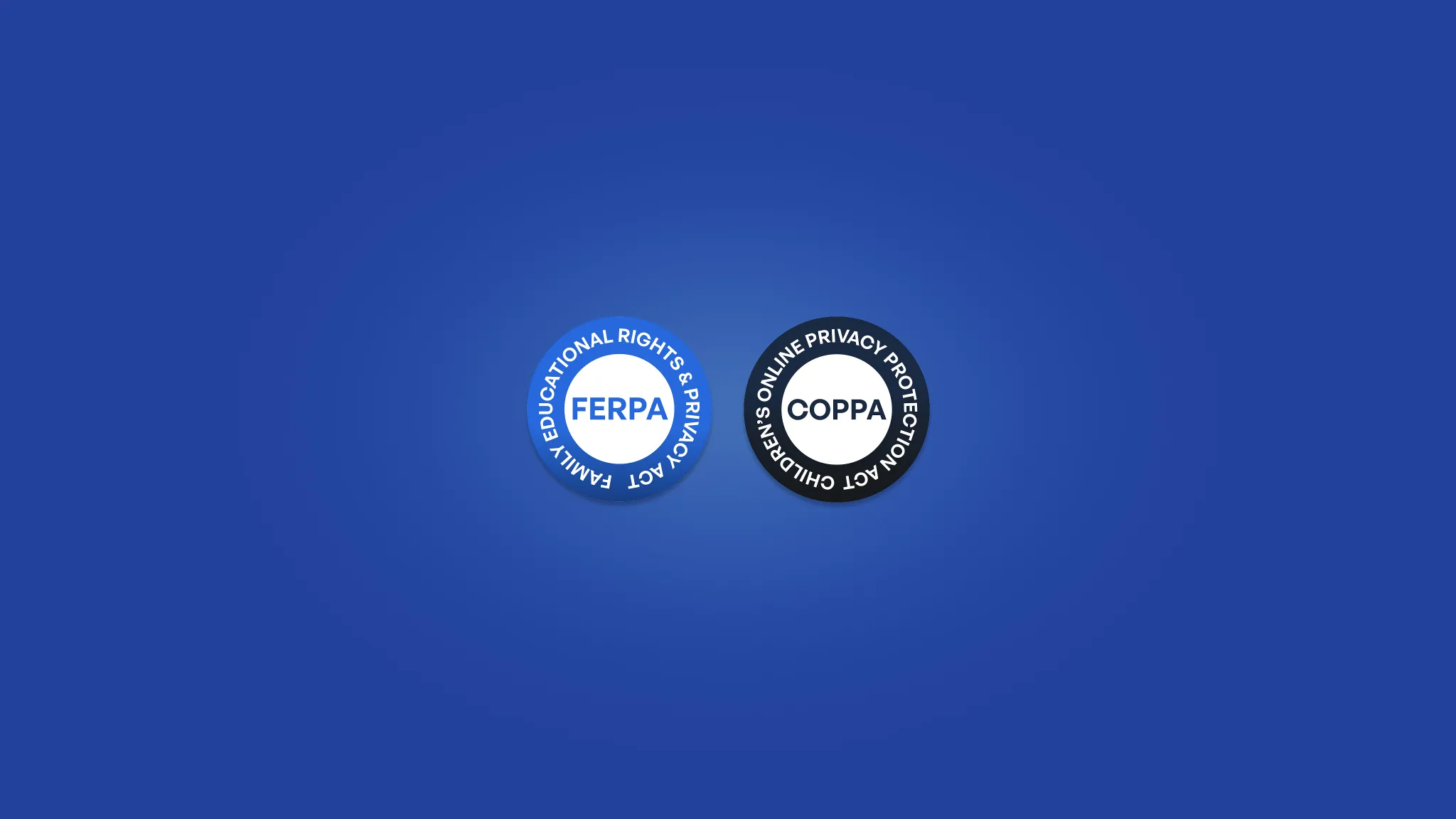
I've spent twenty years in K–12 classrooms, and in the last two of those years I've watched AI go from a curiosity tucked into professional development slide decks to something teachers are using before second period. My doctoral work focuses on AI in instructional planning and equity for students, so I spend a lot of time thinking about who these tools are built for,and what happens to kids when they aren't built for them. The fastest growing question I hear from teachers and administrators is some version of "Is this safe to use with students?"
It's the right question to be asking. Most of the free, consumer-facing AI tools sitting open in browser tabs were never designed with schools in mind. FERPA and COPPA,the two federal laws that govern student data,apply the moment a name or grade hits one of those platforms, whether or not the teacher meant to cross a line. Schools and districts hold some of the most sensitive datasets in the country: academic records, IEPs, health information, family financial data, and behavior patterns. What follows is the conversation I keep having with educators and leaders, written down: what to look for in privacy-safe AI tools, which categories actually fit a school environment, and the practices I'd recommend before any of this reaches a student.
Key takeaways
-
Most consumer AI tools weren't designed for schools and can put you on the wrong side of FERPA and COPPA the moment student data is entered.
-
Privacy-safe AI tools keep student data out of model training, encrypt it in transit and at rest, and back it up with a DPA your district can review.
-
Education-specific platforms are built around K–12 privacy from day one, not retrofitted from a consumer product.
-
With general-purpose AI tools, privacy protections come from the district's contract, so they only cover school accounts. Personal logins fall back to consumer terms.
-
Vendor terms and AI features change quickly, so review them at least once a year.
Why student data privacy matters more than ever
The thing I try to make clear with district teams is that AI doesn't just process the words you type. These tools can collect and retain behavioral data, interaction patterns, and personally identifiable information (PII), and many consumer products, — including the free version of ChatGPT, — may store user input or use it to improve their underlying models. That behavior runs straight into FERPA and COPPA protections. Once a student's name, grade, or learning profile is typed into a non-vetted tool, that information can end up in training data or be exposed in a breach.
There's an equity layer to this that doesn't get talked about enough. The students who are most often described in detail in teacher prompts, — students with IEPs, English learners, kids with behavior plans, — are the same students whose data is most sensitive. When privacy fails, it doesn't fail evenly.
The framing I find most useful with administrators is "open versus closed." Open tools are consumer-facing products that may learn from your data. Closed tools are vetted, institutional products that contractually protect ithem. Districts and universities owe their students, families, and educators clear answers about which tools are in use, what data those tools require, and how that data is protected. Transparency isn't a nice-to-have here; it's part of compliance.
What to look for in privacy-safe AI tools
I get asked for a checklist constantly, so here's the one I use. If a tool can't clear all five of these, I don't recommend bringing it near a student.
1. No student data used for model training
-
The tool must not use student prompts, inputs, or interaction data to train or improve its underlying model.
-
This is the line I won't bend on. Once data is folded into training, it can be retained indefinitely and used in ways no student or family ever consented to.
2. FERPA and COPPA compliance
-
FERPA protects the privacy of student educational records; COPPA covers children under 13.
-
A vendor should state compliance with both explicitly, ideally backed by a data protection agreement (DPA) signed with your school or district.
3. School or district data ownership
-
Schools should retain the right to view, edit, and delete student data at any time.
-
Vendors are custodians, not owners: — the data belongs to the institution.
4. Encrypted data in transit and at rest
-
All data sent to or stored by the tool should be encrypted, protecting it from interception or unauthorized access.
-
Look for SOC 2 Type 2 certification. It means a vendor has been independently audited rather than just claiming to be secure.
5. No advertising or data monetization
-
Student data should never be used for advertising or sold to third parties.
-
This needs to be stated explicitly in the vendor's terms of service and DPA. Vague language is a red flag.
AI tools built specifically for education
The shift I've watched over the last year is the rise of AI platforms built specifically for K–12, and the difference is noticeable from the first conversation. Education-specific tools are designed from the ground up around school privacy requirements. They show up to vendor reviews with DPAs ready, district-level compliance support, and features that give teachers real control over how students interact with AI. The defining characteristic of education-built tools, in my experience, is intent: — student data is treated as something to protect, not a resource to monetize.
A handful of markers will tell you quickly whether a tool is genuinely education-specific or a consumer product in school colors: explicit FERPA/COPPA compliance documentation, a signed DPA process for districts, no use of student data for model training, and teacher-controlled guardrails on student interactions. These tools also tend to carry third-party security certifications (SOC 2 Type 2 is the one I look for) and are often reviewed by independent ed tech safety organizations.
SchoolAI, — where I work as an educational strategist, — is one example. The Spaces feature lets teachers set the guardrails for AI interactions before students ever engage. The platform holds SOC 2 Type 2 certification and is built for FERPA/COPPA compliance, with student data used only to deliver the service, never for model training. Whatever education-specific tool you're evaluating, my standing advice for districts is the same: read the DPA, confirm certifications are current, and vet new features before turning them on for students.
Enterprise and institutional AI options
Some districts and universities pay for enterprise versions of general-purpose AI tools. These handle data differently from the free versions because the district's contract sets the rules. A typical enterprise contract keeps chats encrypted and out of model training, limits how long data is stored, and requires compliance with student privacy laws.
Here's the catch: that contract only covers the accounts the district manages. When a teacher or student signs in with a personal account, the tool treats them like any other consumer, and none of the district's protections apply. I'd push for a written policy requiring school accounts for all AI use, plus a yearly review of the contract, since vendors change their terms and features often.
Education-built platforms handle this differently. SchoolAI's standard data protection terms apply even when a district hasn't signed a separate agreement, so student data is covered under FERPA and COPPA from the start. It’s still always a good idea to use your school-issued account.
The AI platform districts can trust
FERPA/COPPA compliant, SOC 2 Type 2 certified, and built for K-12 from the ground up.
Best practices for educators and administrators
The strongest tool in the world won't protect students from a workflow built on bad habits. This is the short list I share with the teachers and leaders I work with.
-
Vet before you deploy. Don't open a tool to students until you've checked FERPA/COPPA compliance, confirmed a current DPA, and reviewed data retention policies. New AI features should stay disabled until they've been run through a structured evaluation and your district's implementation support process.
-
Use your school account for AI tools. With general-purpose tools, the district's privacy protections only apply when you're signed in with your school account.
-
Keep student information out of free consumer tools. Free versions of general AI tools, like standard ChatGPT, may store or reuse what you type.
-
Never input PII. No student names, IDs, home addresses, specific grades, or other identifying details into any tool that hasn't been vetted and approved by the district.
-
Use data scrubbing practices. Tools like the AI Eraser Chrome extension can strip PII from prompts before submission. It's a good extra layer even on top of vetted tools.
-
Offer opt-out alternatives. Be transparent with students about the data implications of any AI tool you use, and have an alternative ready for students whose families aren't comfortable with their data being processed.
-
Stay current. AI capabilities and vendor terms shift constantly. Revisit DPAs and tool policies annually, and if your district has the bandwidth, stand up a cross-functional AI oversight committee using these questions to ask before implementation.
How SchoolAI approaches student privacy
I'll be straightforward about why I came to SchoolAI: — the platform was built around the considerations I just walked through, not bolted onto them. SchoolAI is built exclusively for K–12. It isn't a consumer product retrofitted for schools; it was designed for the classroom from the start. The Spaces feature lets teachers set the boundaries, topics, and guardrails for AI before any student opens it, and SOC 2 Type 2 certification means the security and student safety practices have been independently audited rather than self-reported. FERPA/COPPA compliance is part of the architecture, not a marketing line — student data is used to deliver the service and nothing else.
What that means for teachers is the part I care about most. Inside that protected environment, you can actually work with student context, — the kind of differentiation and feedback that makes AI useful for equity, — without the workarounds general-purpose tools force on you. The platform also surfaces real-time visibility into student progress and offers lesson planning support, which lightens the load without putting student data at risk. Tools like this are what student-centered AI should look like: privacy by design rather than privacy as an afterthought. If you'd like to see how it works, request a demo or sign up today.
Frequently Asked Questions
Yes. Any AI tool that processes student data should have a signed DPA in place between the vendor and the school or district before use. A DPA spells out what data is collected, how it's used, how long it's retained, and what happens in the event of a breach.
FERPA protects the privacy of educational records for students of all ages and applies to schools that receive federal funding. COPPA specifically governs the online collection of personal data from children under 13. Both can apply to AI tools used in schools, depending on the ages of students involved and the type of data being collected.
Generally, yes. As long as no student PII goes into the tool. Drafting a lesson plan around a standard or topic isn't a privacy risk on its own. The risk shows up the second teachers paste in student names, grades, learning profiles, or other identifying details in their prompts.
AI tools update constantly, and vendor terms drift along with them. I'd review every AI tool agreement at least annually, and any time a significant new feature ships, evaluate it for AI readiness before turning it on for students.

About the author
Jennifer Grimes
Education Specialist at SchoolAI, Former Educator, ELL Educator
Jennifer is a former classroom teacher and ELL educator with 20 years in education. She spent much of her career designing curriculum, coaching teachers, and building professional learning for multilingual and diverse learners. At SchoolAI, she partners with educators to create learning experiences that are clear, doable, and built around meeting people where they are.
Transform your teaching with AI-powered tools for personalized learning
See how every student is doing, and know what to do next.